A study
Water from the sea
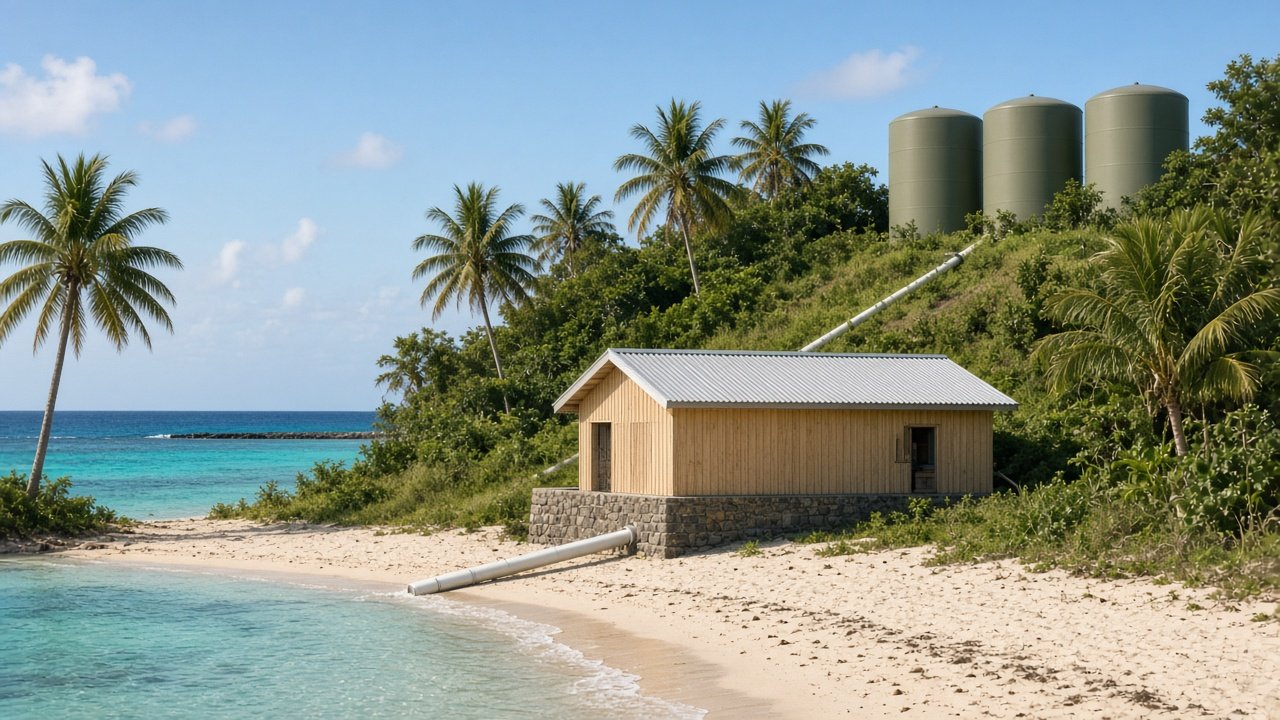
The hotel would make its own drinking water from the sea, on the resort land. Batiki has no town water main, and a dry spell already leaves rain tanks short. This plant does not take that village water. A water engineer still has to design it on the ground. Nothing on this page is built.
The machine is ordinary. The Water Authority of Fiji has already installed solar seawater plants for villages on Viwa in the Yasawas, and on Kia, Kavewa, and Vanuavatu. Those seven plants together were set at about 136,000 litres a day. Island hotels use the same membranes. Pressure pushes seawater through them, and the salt stays behind.
- Intake
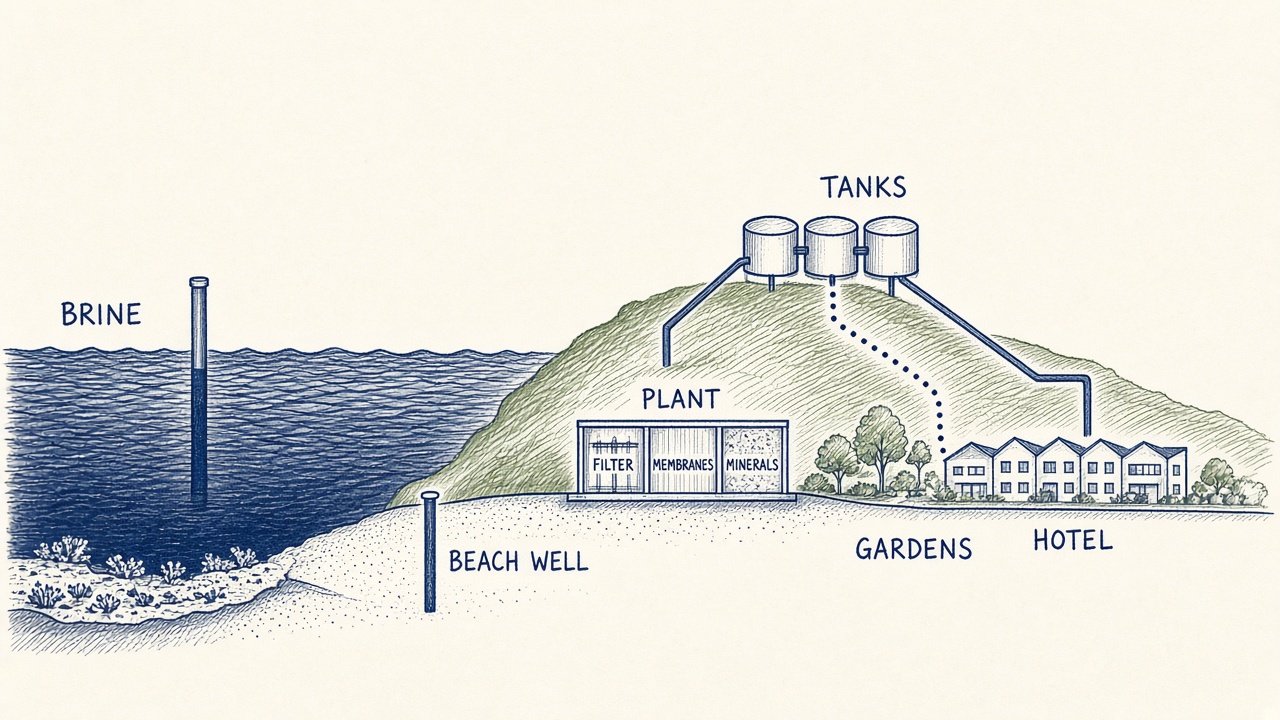
- A well in the beach sand, where the sand is deep enough to do the first filtering. The pipe stays off the coral. If the sand is too thin, a screened intake goes into clear water off the reef flat. The ground decides which one.
- Before the membranes
- A screen, then a sand filter, then a fine cartridge. Grit and algae stay off the membranes.
- The plant
- Seawater reverse osmosis. A high-pressure pump in salt-resistant steel pushes the water through the membranes. A recovery device hands pressure back from the salty leftover, so the pump works less. This is the heavy power use. The pumps run in the sunny hours, while the solar array is making power.
- After
- A little mineral goes back in, so the water is fit to drink and kind to the pipes. Staff test it every day for salt left behind, chlorine, and germs.
- Tanks
- On high ground above the hotel, in the shade, out of the guest view. Water runs downhill, so a tap can still run if the power stops. Three tanks, so one can be washed while the other two stay full. A separate tank is kept full for a fire.
- Brine
- The salty leftover has its own pipe, past the reef flat, into deep water where the tide moves. The outfall spot is chosen on the ground.
- Gardens
- Water from the rooms and the kitchen is treated, then sent to the gardens in a second set of pipes. Drinking water stays in the hotel pipes.
- A full day
- About 92,000 litres when all 80 rooms are full. The allowance is two guests in each room at 400 litres a person (64,000 litres), 55 staff at 150 litres (8,250 litres), and 20,000 litres for the kitchen, the laundry, and the one pool. These rooms have a shower. There is one pool in the plan.
- The machine
- About 120,000 litres a day, a third above a full day, so a busy week and a top-up still fit. A quiet month uses less. An engineer confirms the number after the drawings.
- In the tanks
- About a week of a full day, about 650,000 litres, split across the three tanks. The fire tank is extra.
- Keeping it running
- Spare membranes, filters, and pump parts stay on the island. A barge is not a same-day shop. The membranes are washed on a schedule, and the sand filters are backwashed. If the plant stops, the tanks already hold several days of water.